Events are subject to change. Please double-check the website and calendar for updates.
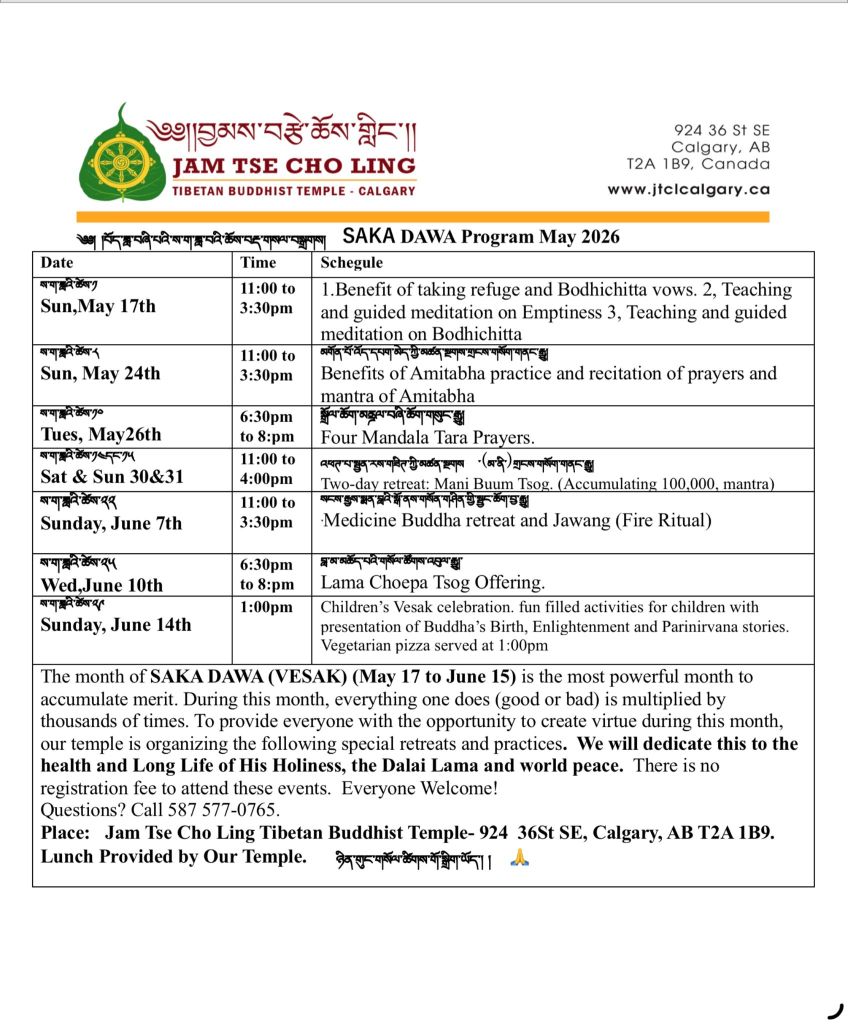
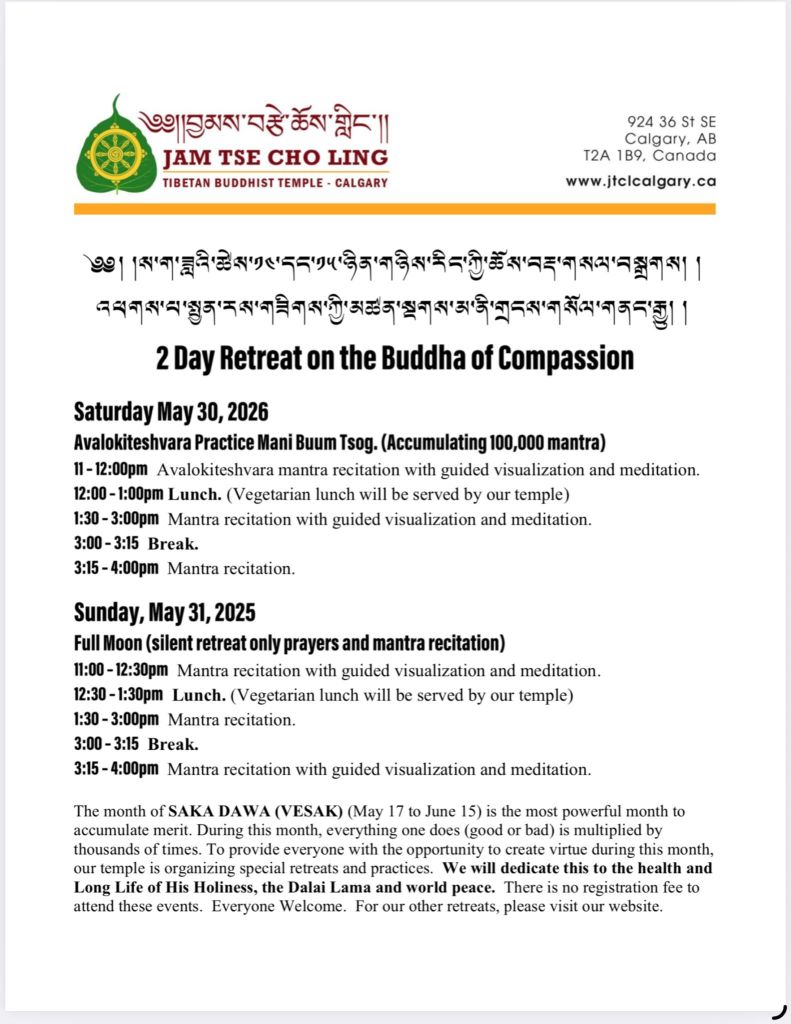
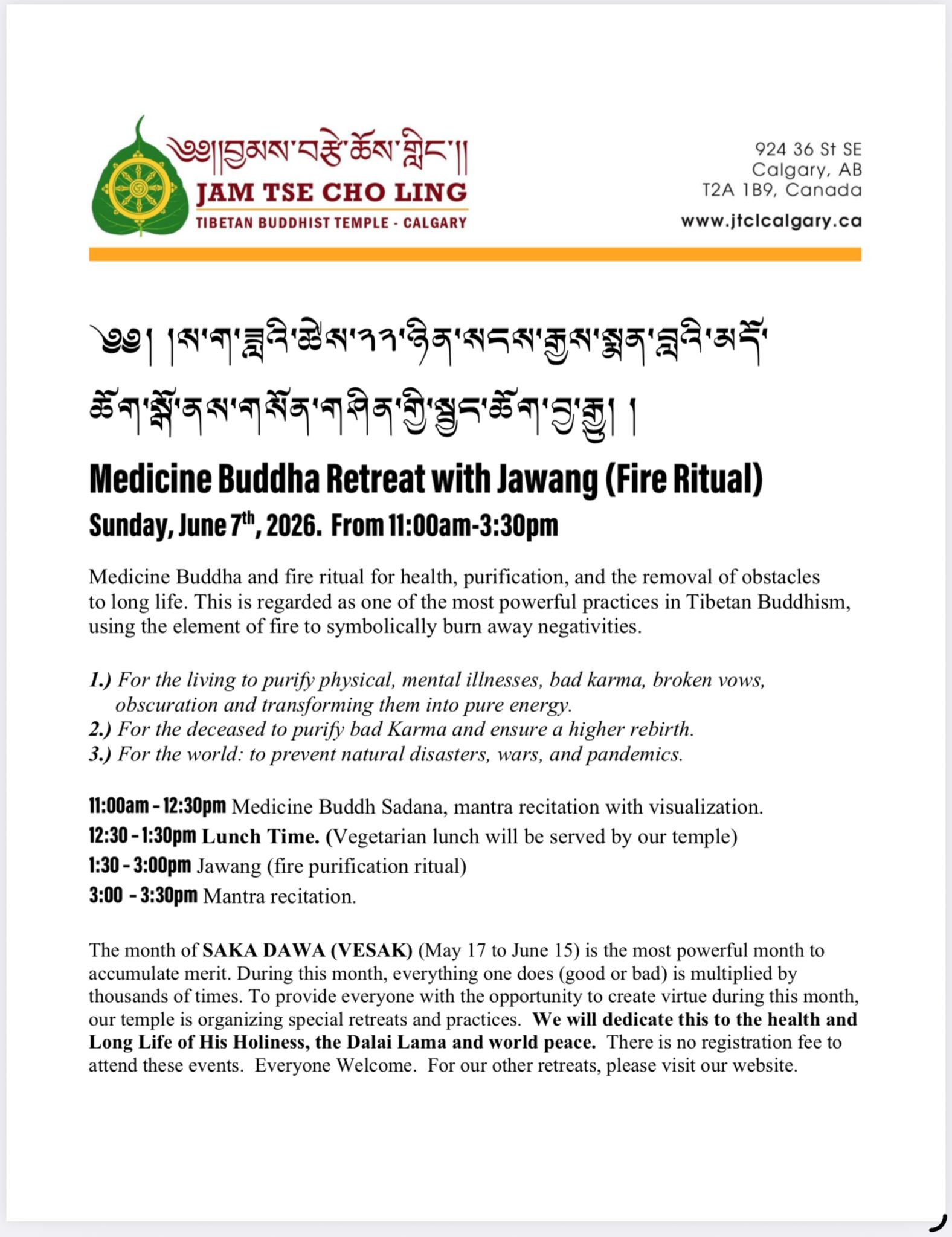
Events are subject to change. Please double-check the website and calendar for updates.
On Wednesday, April 1, 2026 at 6:30pm, our temple will be offering a special Medicine Buddha (Bhaisajyaguru) prayer for the benefit of all those who have lost their lives in the world and for world peace.
This special prayer also offers profound physical, mental, and spiritual benefits, on healing sickness, purifying negative karma, and achieving success.
By reciting the mantra, meditating will help individuals to calm emotional turmoil, reduce stress, and overcome obstacles to enlightenment.
Everyone is welcome to join us.
Hi Dharma friends,
Due to the poor road conditions from the heavy snowfall, we will cancel tonight’s meditation/prayer session.
Sorry for any inconvenience.
Stay safe,
JTCL
Our events are open to the public and free of charge.
Events are open to attend in-person, and are often cast on Zoom.
Our resident teacher is available for private consultation by appointment.
Our Address:
Jam Tse Cho Ling Tibetan Buddhist Temple Calgary
924 36 St SE
Calgary, Alberta T2A 1B9
Canada
Phone:
587-434-4011
Email:
contact@jtclcalgary.ca
honourific form of mother
Spelling (jorlok; Tib. སྦྱོར་ཀློག་) and pronunciation:
ཡུམ་ – ya zhabkyu yu ma yum (yoom)
Geshe la encourages us to learn Tibetan to help gain deeper
understanding of the teachings, and gain access to prayers and rituals that have not been translated. The Tibetan word of the day is offered to give regular exposure to Tibetan reading and vocabulary.
You can adjust your subscription to filter seeing this depending on your interests.
Subscribe to the Tibetan Word of the Day below!


